THE VISION
IMPACT S.C. is our team-based approach to science. IMPACT—Inflammation Metabolism Physiology for Advanced Cellular Therapeutics—reflects the scientific mission of the lab: to understand how inflammation and metabolism shape the function of cells and organs and to use those discoveries to develop new approaches to treating disease. S.C., or Science Center, borrows from the F.C. of soccer clubs around the world and reflects something equally important to our mission: science is a team effort. After several years of running a lab, that idea has only become more important. Good science rarely follows a straight line, and no single person has all of the expertise needed to answer the most interesting questions. My role as principal investigator is to identify important problems, provide the resources and guidance needed to pursue them, and bring together people with different skills and perspectives. From there, trainees are encouraged to take ownership of their projects, become the scientific experts, challenge existing ideas, and help determine where the science goes next. Just as importantly, the lab should help each person figure out where they want to go next. Every trainee brings different interests, strengths, and career goals, and part of my responsibility is to provide the mentorship, opportunities, connections, and support that help them reach those goals, whether they remain in academic science or take what they have learned in a different direction. That requires a research environment built on curiosity, rigor, transparency, collaboration, and mutual respect, where people are comfortable sharing ideas, asking for help, learning from failure, and contributing to one another’s success. Ultimately, the goal of IMPACT S.C. is bigger than any individual experiment, grant, or publication: to build a great team, do meaningful science, improve human health, and help the people who pass through our lab leave prepared to make an impact of their own.
THE SCIENCE
Heart–Brain Communication and Neuroinflammation
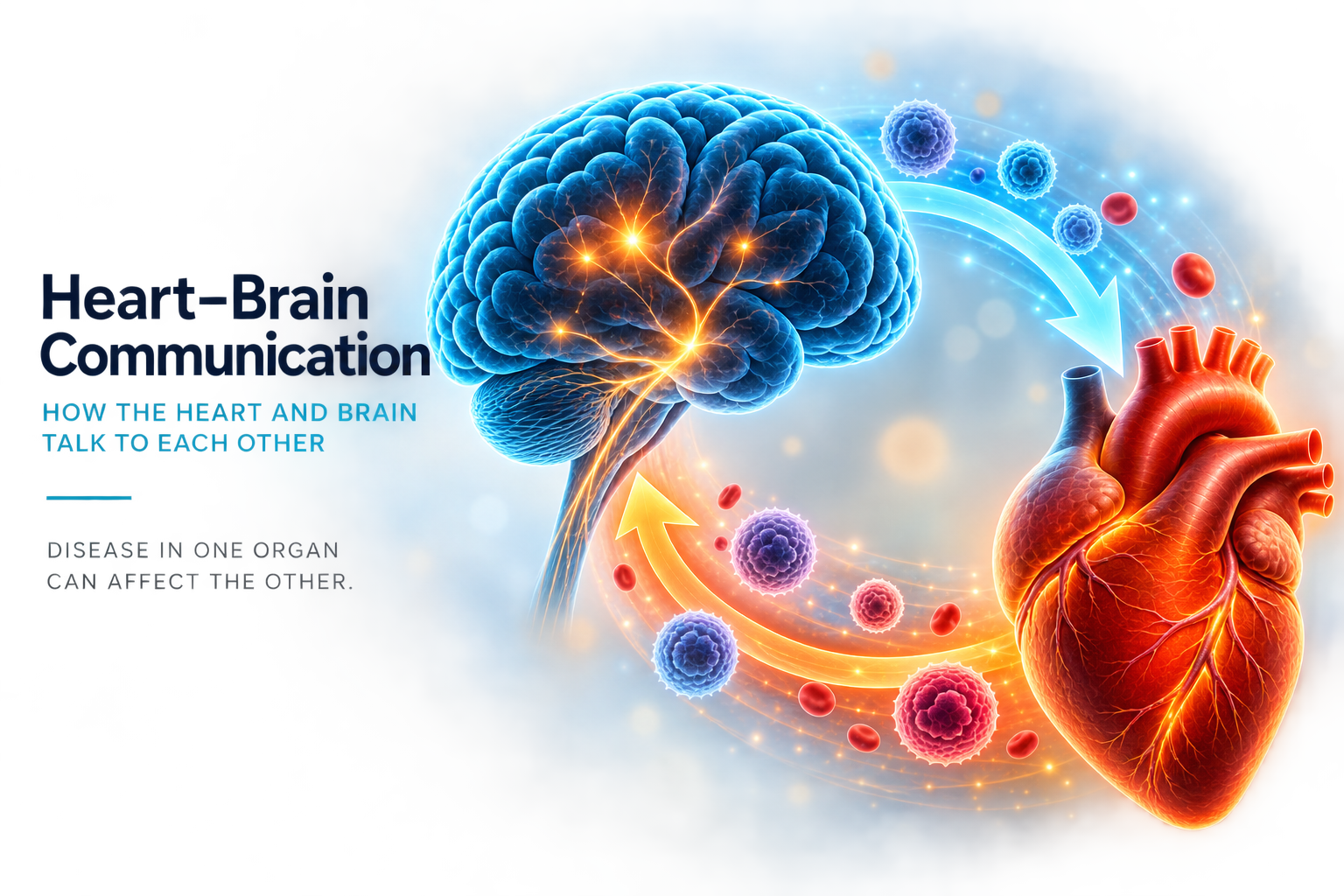
The heart and brain are closely connected, and disease in one can affect the health of the other. People with heart disease are more likely to develop problems with memory and thinking, while injuries to the brain can also lead to problems with the heart. Our lab studies how the immune system helps carry these signals between the heart and brain. One focus is on microglia, the immune cells that live in the brain. During heart disease, these cells can sense changes in the blood and surrounding tissue and shift into a more inflammatory state. If this response continues for too long, it may damage the cells and connections needed for normal brain function. We are also studying communication in the other direction. After a traumatic brain injury, the injured brain releases signals into the blood that can reach the heart and change how it functions. By studying both directions of this heart–brain connection, we hope to understand why disease in one organ can lead to lasting problems in another—and how we might stop that process.
Cardiometabolic and Multi-Organ Inflammation
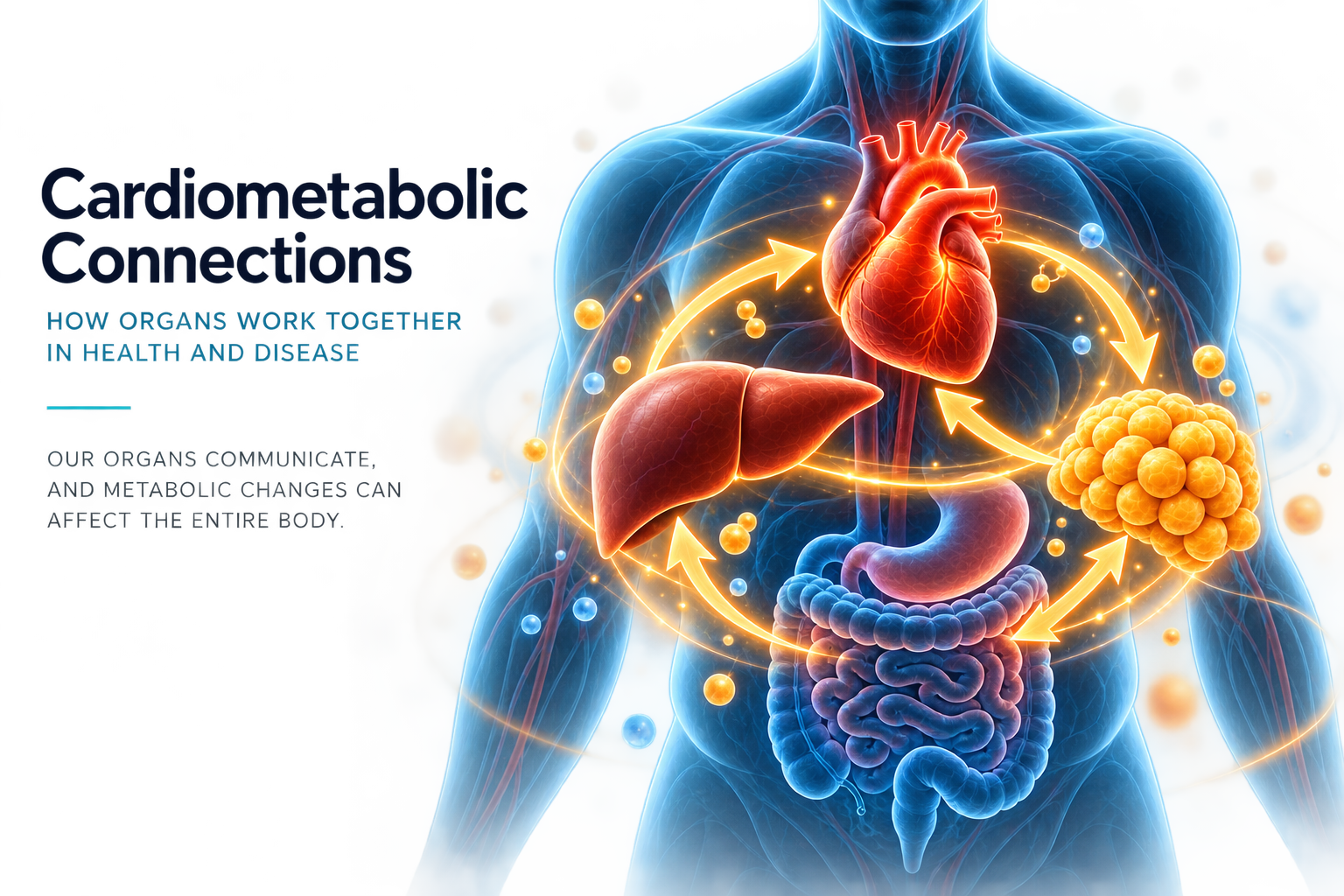
Diseases such as obesity, fatty liver disease, high blood pressure, and heart failure often occur together. One reason may be that our organs do not become sick in isolation. The liver, heart, fat tissue, blood vessels, and immune system are constantly communicating through molecules carried in the bloodstream. During metabolic disease, these signals can change and spread stress and inflammation throughout the body. Our lab studies how this communication contributes to heart failure, especially heart failure with preserved ejection fraction (HFpEF), a common form of heart failure linked to aging and metabolic disease. We are particularly interested in how changes in the liver and other metabolic organs alter the signals reaching the heart and how immune cells respond to them. By comparing disease across several organs, we can look for common changes that may help explain why cardiometabolic diseases so often develop together. Our goal is to find ways to break these harmful connections and treat the whole disease rather than focusing on only one organ.
Immune Mechanisms of Cardiac Injury and Repair
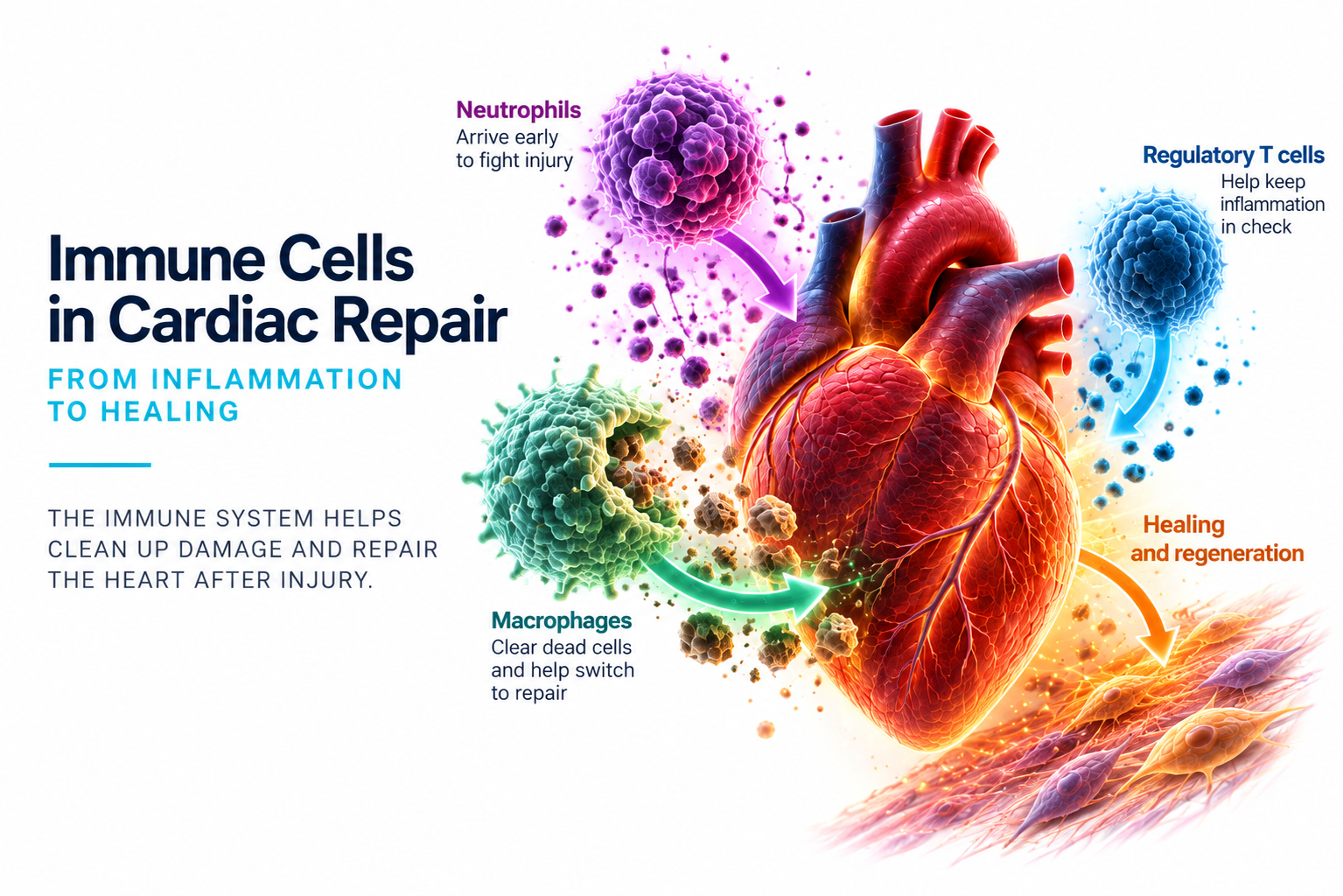
After a heart attack, the immune system has an important job to do. Dead and damaged cells must be removed, inflammation must be controlled, and the surviving heart tissue must begin to heal. Different immune cells take part in this process at different times. Neutrophils arrive quickly after injury, while macrophages help clear damaged cells and guide the transition from inflammation to repair. Other immune cells help control these responses and prevent inflammation from continuing for too long. Our lab studies how these immune cells work together to determine whether the injured heart heals or moves toward heart failure. We are especially interested in how immune cells change their behavior after injury, how they remove dead cells, and how they communicate with heart cells and with each other. Instead of simply trying to block inflammation, our goal is to understand the body's natural healing response and find ways to help the immune system repair the heart more effectively.